



MARCH 2024 - 14TH SUBSIDISED RS TERA SCHEME
A fourteenth subsidised RS Tera Scheme (with 25 boats) was launched on 1st March 2024 and applications for new Eric Twiname Trust subsidised RS Tera Mark 2 dinghies are now invited. The link to the RS application form is:
https://www.rssailing.com/eric-twiname-trust/
As before, this project involves the Trust teaming up with RS Sailing to help sailing clubs purchase RS Tera Sports dinghies at the significantly reduced cost of £2,250, the package including VAT, a launching trolley and top cover. As a registered charity with a mandate to support competitive sailing for youth, we think this 'grass roots' scheme is an ideal way to encourage clubs to establish Junior fleets and Junior Race training programmes and by so doing help a large number of youngsters on to the water.
APRIL 2017 - BOWMOOR SAILING CLUB AND THEIR THREE NEW RS TERAS
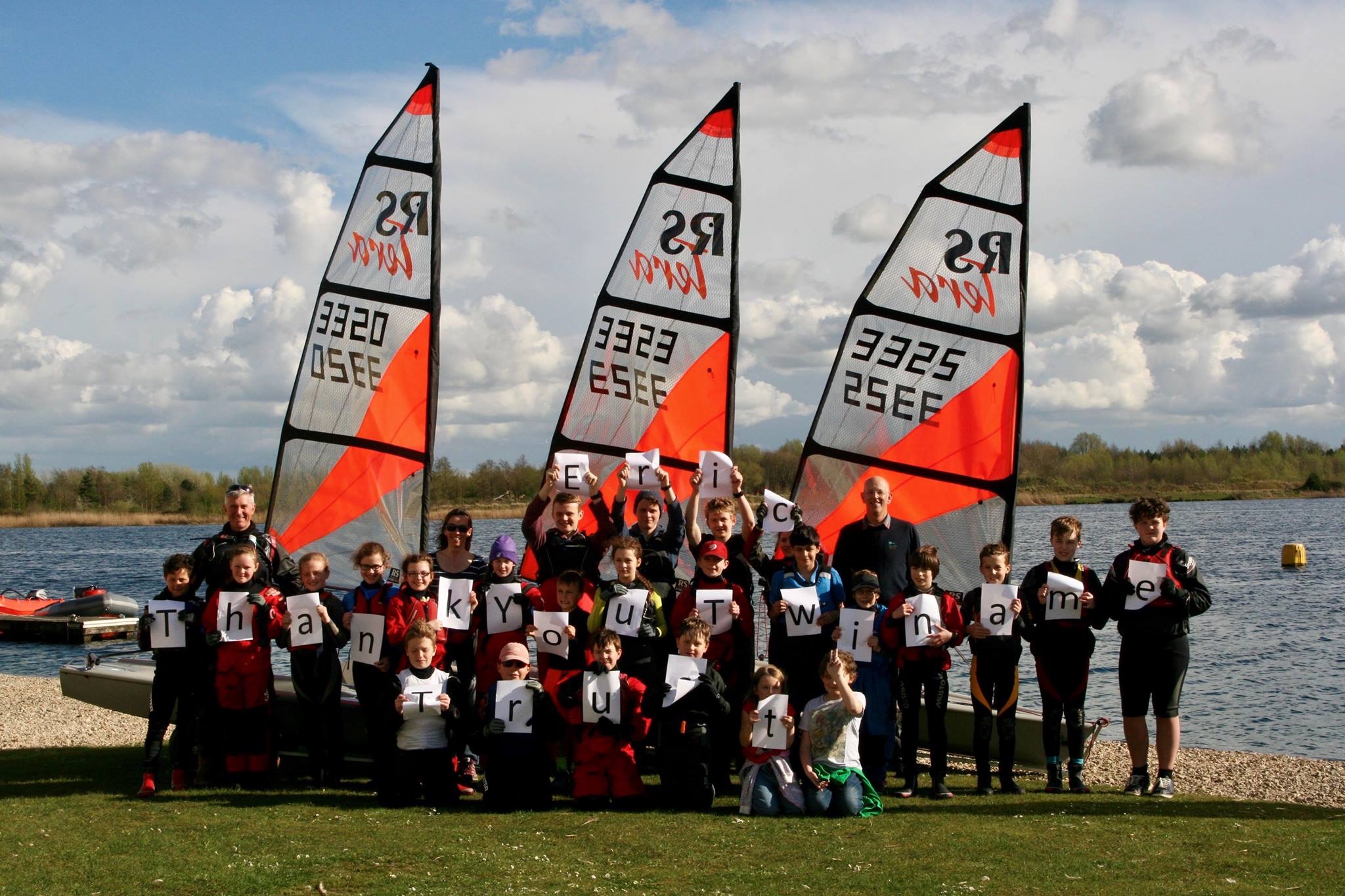
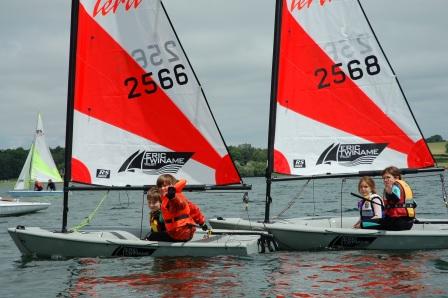
Thank you to Bowmoor Sailing Club and RS Sailing for sharing this wonderful photo with us:
"I hope this picture will convey the excitement of our young sailors at Bowmoor Sailing Club on the commissioning of the 3 RS Teras purchased through the Eric Twiname Trust. The boats have created a real spark of interest and its going to mean so much to our training and social sailing." - Tom Whittingham
 A Case Study by Ewan McClellan, the Training Officer of Gairloch Boat Club, Ross-shire, following the Club’s award of an RS Feva XL by the Eric Twiname Trust in March 2016.
Gairloch Boat Club has been promoting participation in the sport of sailing since 1981. Based in a dispersed Highland community it not only serves Gairloch but also the various small communities in a thirty-mile landward radius of Gairloch. As with many fragile Highland Communities there is a significant lack of facilities in the area and far more limited opportunities for participation in sport.
Like many clubs, over its lifetime there have been fluctuations in membership, levels of participation and its ability to deliver sail training within the community. In the late 1980’s and 1990’s the club was an RYA recognised Training Centre and ran an extensive sail training programme for members and a school holiday training programme for local young people.
Since that time membership has shrunk and over the past few years has been stable at around 40, although with few junior members and just a small core group of regular sailors. In 2013 the AGM of Gairloch Boat Club decided that the club needed to change if it was to have a long-term future and be a valued asset within its community.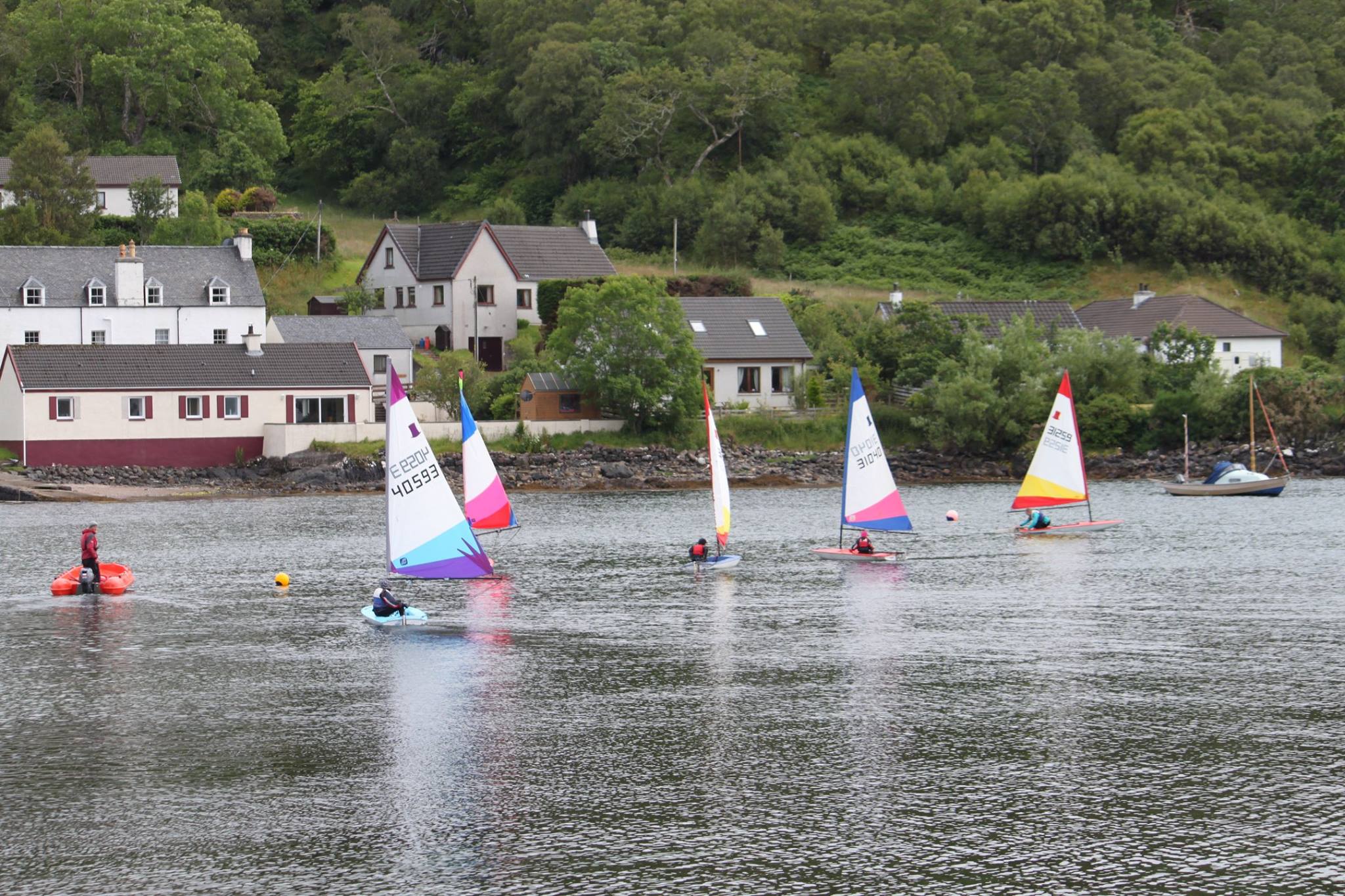
Two elements were identified as key to rebuilding of the Club: updating the fleet of club boats and making a step change in junior membership and regular participation.
The club fleet comprised of a very old Enterprise and two Wayfarers, only one of which was sea worthy. Both club ribs were in a bad state of repair, with one of the engines over 15 years old. With member contributions we were able to repair the rescue boats and purchase 5 second hand Toppers to kick-start the drive for juniors. Attempts to secure funds from community grant schemes in 2014 and 2015 were largely unsuccessful, as they invariably had to demonstrate permanent job creation.
In order to grow the junior membership we have been targeting families, the local school (through the DofE scheme and through presenting the Club’s programme at assembly) and youth groups, such as the Scouts and Air Cadets. To attract them we arrange each year a programme including RYA courses, family try sailing days and specific days for youth groups at the club. Once engaged, we run a series of junior coaching days through the season, to aid their development and progression into racing. During the 2015 season we had grown a core group of 20 keen juniors that we aim to grow further this year.
The grant from the Eric Twiname Trust has come at a perfect time in the progression of the Club’s junior programme, as it will allow us to both develop the skill set of the juniors and expand the breadth of what the Club can offer.
MAY 2016 - 30th RYA ERIC TWINAME JUNIOR CHAMPIONSHIPS at RUTLAND SAILING CLUB
273 sailors competed over a sunny, warm weekend in relatively light wind conditions, with down to the wire racing for some classes on the final day, culminating in Wales being crowned overall team Champions and taking home the Shield Trophy. Wales also picked up the Dinghy Trophy after an impressive performance in the Topper and RS Feva classes.
The South East Zone dominated the windsurfing classes, securing first and second in the 6.8m and 7.8m Techno. The East Zone won overall in the Optimist class.
Alongside the Eric Twiname Championship the Laser 4.7 class ran their selection series.
For further information and results see http://www.ryaracingevents.org.uk.
WORMIT BOATING CLUB'S EXPERIENCE OF THE ERIC TWINAME TRUST SUBSIDISED RS TERA SCHEME
From Robbie Wilson, Junior Training Officer, Wormit Boating Club, commenting on the club’s experience of the Eric Twiname Trust Subsidised RS Tera Scheme: 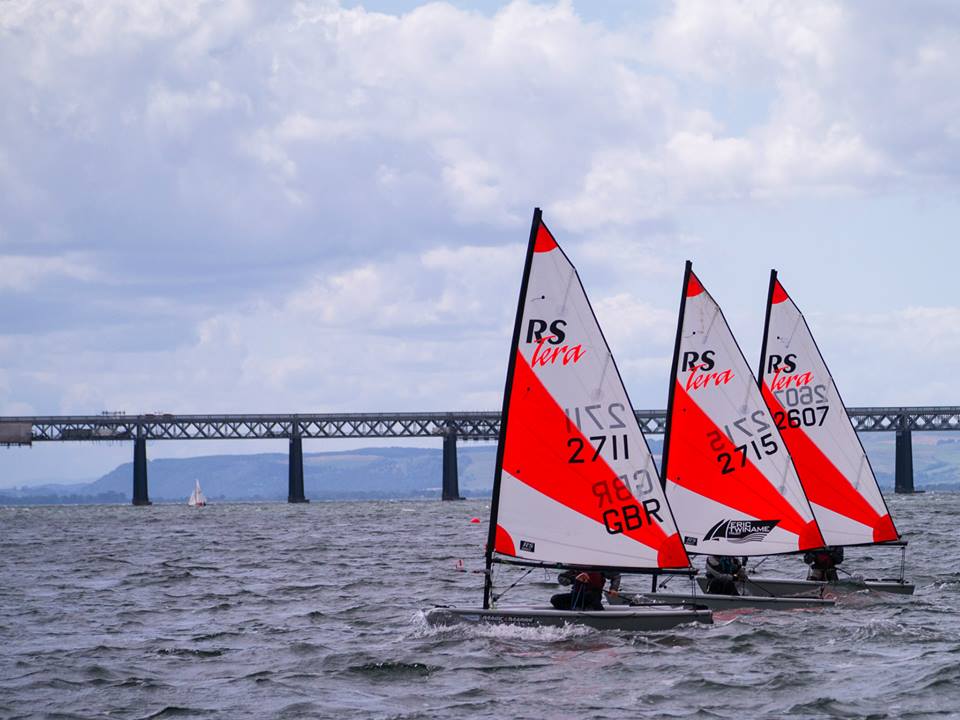
Wormit Boating Club in Fife, Scotland, has had considerable support over the last few years from the Eric Twiname Trust and RS Sailing. We were keen to get youngsters from non-sailing families in the local community into sailing and thereby encourage new members into our club. The ET Trust and RS Sailing, along with other trust organisations, have helped to put together a fleet of RS Teras and Fevas that youngsters can use at our club on club training and racing days. We have thus managed to introduce to sailing many new youngsters who would not otherwise have had that opportunity by giving them the ability to access the club fleet. This is great for the sport of sailing and for bringing new members into our club. The Teras are brilliant club training boats for youngsters, being robust, good for two up at first in the boat if required, and then developing into a great single-handed boat for children to start racing in. Most of all the youngsters love sailing them. A BIG THANKS to the ET Trust and RS Sailing for their help - from Wormit Boating Club.
MARCH 2016 - RYA SUZUKI DINGHY SHOW
The trustees of the Eric Twiname Trust were pleased to have the opportunity of being able to share a display stand at the 2016 RYA Dinghy Show with Yamaha Marine UK and Barnet Marine Centre Limited. This stand featured a new Barnet Marine manufactured 5 metre XS RIB with a 50hp Yamaha 4-stroke outboard and trailer, the latest incarnation of the Trust’s on-going commitment to the provision of support RIBS for the RYA recognised youth and junior dinghy sailing classes in the UK.
This thirty second Trust-funded RIB – named “Eric Twiname 32” - was officially handed over at the Dinghy Show to the UK RS Feva Class Association by the Trust’s Secretary, Bruce Aitken, and accepted on behalf of the association by its chairman David Cotterell.
Whilst the Trust funds the purchase and insurance of the RIBS, the RYA manages the scheme on the Trust’s behalf, all to an agreed programme that caters for regular replacement of the RIBS according to their usage, thereby ensuring that the classes always have a valuable, versatile and dependable training asset.
OCTOBER 2015 - RYA ERIC TWINAME YOUTH AND JUNIOR TEAM RACING CHAMPIONSHIPS
Team ‘West Kirby SC’ were crowned Youth Champions and ‘The Sailing Assassins’ Junior Champions at the 2015 RYA Eric Twiname Youth and Junior Team Racing Championships, held at Oxford Sailing Club on Farmoor Reservoir over the weekend of 17-18 October 2015.
The first full round on Saturday was completed in light north-easterly winds for both the 27 teams in the Youth (u19) category and 23 teams in the Junior (u16) category. Based on these results the fleets were then split into smaller Gold and Silver divisions, three for the Youths and two for the Juniors. Both the Youth and Junior fleets completed their Gold and Silver splits before the wind shut off on Sunday afternoon, becoming so light that the race committee could not go proceed with the planned knock-out round. The winners were therefore decided from the final round results.
Sailing in Fireflies, West Kirby Sailing Club is known for its impressive team racing talent and the ‘West Kirby SC’ Youths did not let their club down, dominating the Youth racing event by winning all of their 15 races and being crowned Youth Champions. Chasing the ‘West Kirby SC’ team were ‘Winchester College’ in second, who put up a good fight in their Gold league play-off. ‘I’d Mark Trap That’ rounded off the Youth podium in third.
Racing in RS Fevas, ‘The Sailing Assassins’ won all four of their Gold A races to take the Junior Championship title. ‘Sevenoaks School’ finished second, and team ‘RS Tera Sports’ were third.
See the full results on the event website http://enter.sailracer.org/events/event-V2.asp?eventid=202032
MAY 2015 - 29th 2015 : RYA ERIC TWINAME CHAMPIONSHIPS, RUTLAND SAILING CLUB
OCTOBER 2014 - RYA ERIC TWINAME YOUTH & JUNIOR TEAM RACING CHAMPIONSHIPS
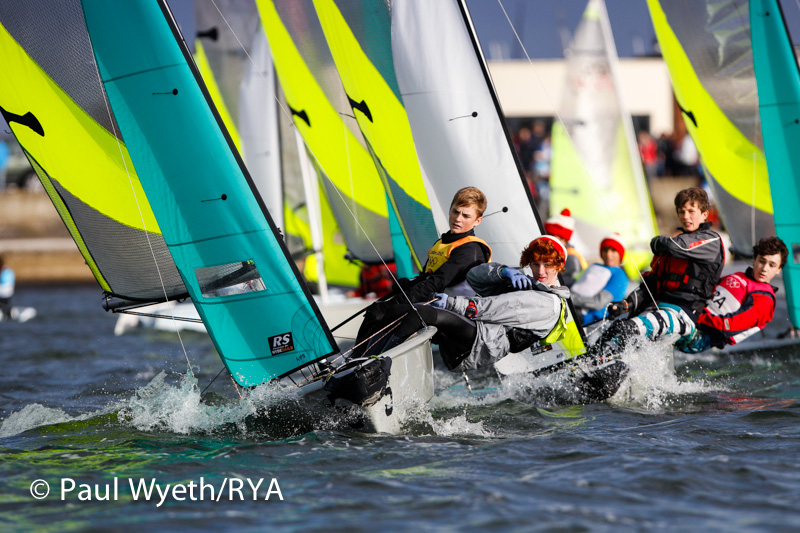
On 18th/19th October, the 'biggest team racing event in the world' was held again at Oxford Sailing Club, Farmoor Reservoir, with 23 Junior teams and 27 Youth teams competing for championships honours. Following a full day's racing on Saturday with 10 rounds completed on both the Youth course and the Junior course, standings started phenomenally close on the Sunday.
But with Sunday bringing gusts of up to 42 knots, racing soon came to a close at lunchtime after only one more round of stage one was possible, resulting in the event winners being decided from the final standings in the round robin stages. The blustery weekend was action packed and the enthusiasm from over 300 young competitors in abundant evidence. The quality of sailing was impressive given the challenging conditions; it was regrettable that it was not possible to complete the full schedule of sailing before further weather deterioration.
Winning glory went to 'Gingernut and Assorted Biscuits' and team '420', crowned 2014 RYA Eric Twiname Youth and Junior Team Racing champions in their respective categories.
For more detailed information on the results please visit the event website at www.ryaracingevents.org.uk.
To view some great photos of the event (courtesy of Paul Wyeth Photography), please visit our new Facebook page at www.facebook.com/erictwinametrust.
JUNE 2014 - 3 PEAKS CHALLENGE IN AID OF TRUST
The Trust Secretary's daughter, Tamsin, and one of her brothers, Callum, successfully completed the 3 Peaks Challenge on 21 June 2014 and in so doing raising the sum of £1,675 plus Gift Aid for the Trust. The Challenge involved climbing the highest mountains in Scotland (Ben Nevis), England (Scafell Pike) and Wales (Snowdon) in 24 hours and the team achieved that aim with only 9 minutes to spare after encountering wind, snow, rain, searing heat, sugar overdosage and sleep deprivation! As Tamsin has noted "it was an incredible experience; extremely tough but a joy to hike amongst such stunning scenery".
The trustees would like to thank all those individuals, companies and sailing clubs who donated so generously. To make an on-line donation in support of youth sailing you can do so on the JustGiving website www.justgiving.com/erictwinametrust.
MAY 2014 - 28TH RYA ERIC TWINAME CHAMPIONSHIPS, RUTLAND SAILING CLUB
It was the RYA South East Zone who reigned triumphant at Rutland Water over the weekend of 10/11th May and they were crowned 2014 RYA Eric Twiname Champions when the regatta came to an exhilarating finish on the final day of racing. Having endured testing conditions with strong squalls on the Saturday, the concluding day of the Championships bought with it similar conditions for the 241 competitors at the event, with spells of sunshine, short showers but more manageable gusts of 20-25 knots. As a result the three dinghy classes completed three races while the four windsurfing classes managed only two allowing the young sailors to get some scores on the board after a lack of racing on day one. In addition to the 2014 RYA Eric Twiname title, the RYS South East Zone also won the Eric Twiname Dinghy Trophy, awarded to Zone with top overall dinghy, while the RYA South Zone got their hands on the Eric Twiname Windsurfer Trophy, awarded to the Zone with top overall windsurfing score.
Within the classes the South East Zone was overall top in the RS Feva XLs, the South Zone was overall top in the Toppers whilst the South East was overall top in the Optimists. Within the windsurfing fleets, the top RYA Zone in the 4.5m rig went to Wales, the 5.8 and 7.8 titles went to the South while the South West clinched the 6.8 top zone.
For the full list of results from the 2014 RYA Eric Twiname Championships visit www.sailingresults.co.uk.
 JULY 2013 - CHEW VALLEY SAILING CLUB RECEIVES 100th ERIC TWINAME RS TERA SPORT
A 4th 25-boat scheme was launched earlier in the year and is now complete, with the 100th boat in
this scheme being purchased by Chew Valley Lake Sailing Club, as per their announcement below:
Chew Valley Lake Sailing Club was delighted to take delivery of two new RS Teras for use by its junior sailors. The boats were purchased with support from the Eric Twiname Trust which was set up in 1980 in memory of a former champion sailor. Mike Thompson, the club Commodore, said that Chew was very proud to receive support from the Trust and the boats just delivered to the club included the 100th RS Tera delivered around the country to help promote youth sailing. He praised the Trust for its extensive work in encouraging young people into the sport of sailing through the provision of financial and other support.
Ali Woodiwiss, the club's youth co-ordinator, said that the club was thrilled with how popular the new boats had proved to be, noting that "I'm struggling to get the children out of them! The new boats are a perfect size for our younger sailors and their skills are coming on leaps and bounds".
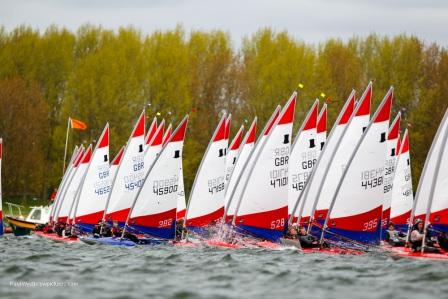 Photo by Paul Wyeth, pwpictures.com.
MAY 2013 - 27th 2013 : RYA ERIC TWINAME CHAMPIONSHIPS, RUTLAND SAILING CLUB
The RYA South West Zone were the winners as day two of the 2013 RYA Eric Twiname Championships came to a close on Rutland Water on Sunday 12 May. Having endured fickle winds, strong gusts and driving rain on day one of the regatta yesterday, the concluding day of the championships brought with it far more favourable conditions for the 268 competitors at the event, with spells of sunshine and an average 12-14 knots. As a result the days full complement of three races took place allowing for some swapping of places at the top of the fleets and the RYA South West Zone to clinch the prestigious Eric Twiname Shield.
The RYA South Zone won the Eric Twiname Dinghy Trophy, awarded to the Zone performing best from the top two dinghy classes out of the three, whilst the South East Zone wrested the Eric Twiname Windsurfing Trophy out of the grasp of last year's winner the North Zone, awarded to the Zone scoring best from two of the four windsurfing classes.
With the long-standing and on-going support of the Eric Twiname Trust, the event is free to enter with all of the costs associated with the running of the regatta met by the RYA and the Trust.
For the full set of results from each class and for more information on the RYA Eric Twiname Championships please visit the event website at www.ryaracingevents.org.uk.
OCTOBER 2012 - GREAT SOUTH RUN in Portsmouth
George Reed, the son of one of our trustees, John Reed, successfully completed the 10-mile Great South Run held in Portsmouth on 28th October 2012 in the very creditable time of 1 hour, 13 minutes and 12 seconds, some 7 minutes under his target time. In doing so, George has helped to raise over £1,500, including Gift Aid, for the Trust. The trustees are most grateful to George for his efforts and indeed to all those who supported him with such generous donations.
OCTOBER 2010 - CHANGE OF CHARITABLE TRUST TITLE
In October 2010 the Trust’s name was shortened by the omission of the word ‘Memorial’ so that it now more simply reads "The Eric Twiname Trust". This amendment was instigated after consultation with and acceptance by the Charity Commission, and their Central Register now reflects this update.
OCTOBER 2010 - FIREFLY NO.1 - 'FE'
This historic dinghy has been on loan to, and displayed by, the National Maritime Museum Cornwall for a number of years now. In October 2010 the owners, Graham Henderson, Max Evans, Vivien Wilson and David White, agreed to transfer ownership in perpetuity to the Museum with the proviso that a donation be given by the Museum to The Eric Twiname Trust in lieu of any specific sale charge. The trustees are indebted to Fe's previous owners and to the Museum for their very kind generosity and are proud to be associated with this remarkable dinghy which occupies such an important part in the history of dinghy design development.
The Firefly's origin goes back to 1938 when the sailing clubs of Oxford and Cambridge Universities asked Uffa Fox to design a dinghy similar to the National 12, but a one-design and more suitable for team racing. The resultant design, to be known as Sea Swallow, was completed in 1939, just as the second World War commenced, and as a result it was shelved.
At about the same time a director of the Fairey Aviation Company, Colin Chichester-Smith, was developing plans to mass produce a sailing dinghy employing the same methods used to construct wartime aircraft such as the Mosquito and the Horsa Glider. The process was known as hot moulding which consisted of gluing veneers of timber together on a shaped mould, and curing the assembly using electrically heated bands which held everything in place. The resulting laminated plies were very stiff, strong, waterproof and highly resistant to rot.
In 1946 Uffa Fox was asked by Chichester-Smith, together with Stewart Morris, to design a one-design twelve foot dinghy. Charles Currey was also moving to Fairey to develop the marine section at the Hamble factory. Uffa Fox dusted off the Sea Swallow design and replaced it with the name Firefly, so named after the Fairey Firefly, a Second World War-era carrier-borne fighter and anti-submarine aircraft used by the Fleet Air Arm.
The mass production techniques were refined with the hulls and decks now moulded separately from pre-cut parts on assembly lines. The assembled hulls were placed in autoclaves where they were heated and pressurised. Once the deck was fitted the completed dinghy was strong enough not to need any additional frames. It was also completely leak-free. Early boats were built from laminates of birch ply, left over from the stocks used to build Horsa gliders. The mast, built by Reynolds, was aluminium alloy with the top section made from spruce.
On Sunday May 5th, 1946, the final race for the Henley Challenge Cup was sailed in cold conditions with a strong north easterly wind which capsized several boats. It was a good opportunity to test the prototype of the Firefly Class, which was making its first public appearance, and racing against a fleet of National Twelves. Sailed by renowned dinghy sailor Charles Currey, who was competing against the likes of Beecher Moore and Jack Holt and sailing the Firefly for the first time, Currey and his crew put up a great performance and came second.
A number of modifications have been made to the class over the years including construction in GRP in 1968, and the introduction of a one piece rotating mast by Proctors in 1970. Despite the introduction of plastics to replace ply moulded boats, it is a testament to their build quality that there are still many wooden boats racing regularly.
The Firefly was one of the first production dinghies ever built in large numbers, long before the days of glass reinforced plastic boats, and there is no doubt that it put dinghy sailing within financial reach of many people - the initial cost of a boat was £65. The first four were bought by Sir Geoffrey Loules, Commodore of Itchenor Sailing Club, and he named them Fe, Fi, Fo and Fum respectively. The boat was also considered to be sufficiently competitive enough to be selected for the single handed class in the 1948 Olympics, although it was replaced in 1952 by the Finn.
Fe can be viewed in Falmouth at the National Maritime Museum Cornwall, the website for which is www.nnmc.co.uk and telephone number 01326 313388.
Eric Twiname was a great Firefly enthusiast and raced them regularly in team racing competitions, as well as at the annual Firefly National Championship where he consistently finished well, including once winning the coveted Sir Ralph Gore trophy.